
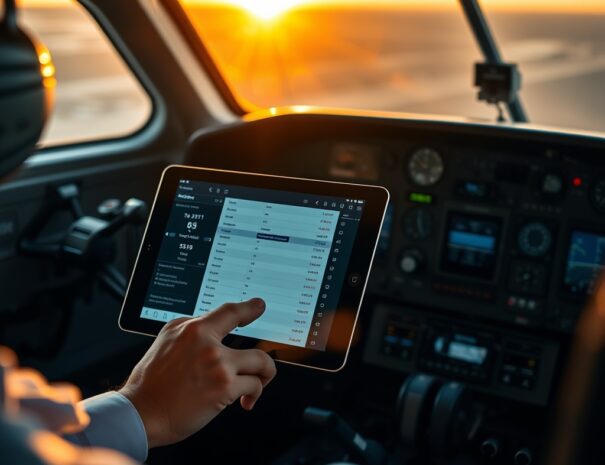
Every pilot keeps a logbook — it’s a regulatory requirement. But how you keep it is increasingly a matter of choice, and more pilots across the DACH region are moving away from paper.
The Paper Logbook: Reliable, but Limited
The paper logbook has served pilots well for decades. Every entry handwritten, every hour total calculated manually, every signature earned in the cockpit. But as flight hours accumulate, the limitations become harder to ignore:
- A single water damage incident or fire can destroy years of records with no recovery option.
- Manual hour totals accumulate errors — often unnoticed until a checkride catches them.
- Searching for a specific flight, aircraft type, or date range takes disproportionate time.
- The physical book isn’t always on hand when you need it — at an examiner’s desk or a foreign FBO.
What cloudlog.aero Does Differently
Automatic Flight Import from aircraft-info.de and vereinsflieger.de
The biggest time saving doesn’t come from faster data entry — it comes from not entering data twice. cloudlog.aero integrates directly with aircraft-info.de and vereinsflieger.de, the flight management systems used by the majority of flying clubs across Germany, Austria, and Switzerland. When a flight is logged in the club system, it appears in your personal logbook automatically — no duplicate entry, no transcription errors.
For club pilots flying regularly from a shared fleet, this means the logbook entry is complete before the aircraft is back in the hangar.
Why Pilots Are Making the Switch
When pilots move from paper to cloudlog.aero, they consistently point to the same reasons:
- Data security: Automatic cloud backup means your records survive hardware failures, floods, and fires.
- Accurate totals: Night, IFR, and PIC hours are calculated automatically — no more mental arithmetic before a rating application.
- Always available: Smartphone, tablet, or browser — your logbook travels with you.
- Instant reporting: Total hours on a specific aircraft type or within a date range — one click, not fifteen minutes of counting.
- Easy to share: PDF export for checkride preparation, insurance documentation, or airline applications in seconds.
EASA Requirements and the Digital Logbook
Under EU Regulation 1178/2011 (FCL.050), pilots are required to maintain a personal logbook recording the date, departure and arrival points, aircraft type and registration, role (PIC, dual, solo), block time, and night and IFR hours flown. cloudlog.aero supports the EASA-compliant logbook format and covers all required fields. There is no EASA certification for logbook software; compliance with the content requirements remains the responsibility of the individual pilot.
Try It Free for 30 Days
cloudlog.aero is free to try for 30 days — no credit card required. Existing logbook data can be imported so no entries are lost in the transition.
Start your free trial at cloudlog.aero